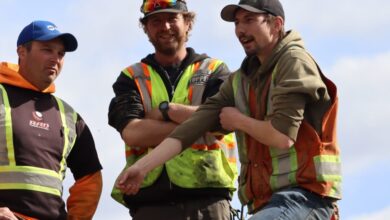
Raises Questions: Is Discovery Phasing Him Out or Is There a Darker Reason?
Gold Rush Shocker: The Real Reason Mitch Blaschke Is Missing From Season 16
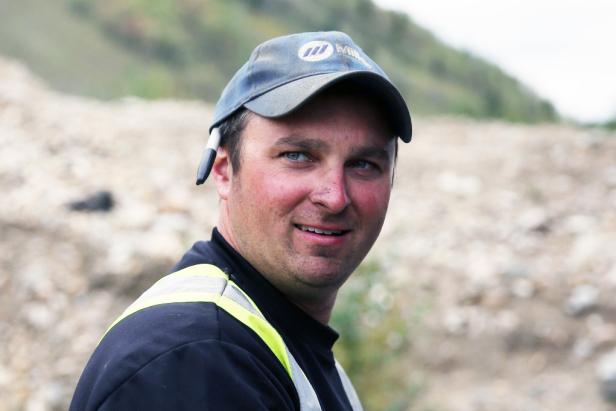
As Gold Rush barrels into one of its most ambitious chapters ever, the spotlight has never been brighter on Parker Schnabel. Season 16 is defined by one staggering goal: 10,000 ounces of gold in a single season. With gold prices climbing, multiple wash plants running simultaneously, and Parker pushing harder than ever, everything about this season feels bigger, louder, and more high-stakes.
Yet amid the roar of excavators and the constant tally of gold weights, longtime fans have noticed something strangely quiet.
Mitch Blaschke—once one of the most visible and reliable faces on Parker’s crew—is suddenly not on screen very much.
For viewers who’ve followed Parker’s journey for years, Mitch’s reduced presence feels unsettling. He wasn’t just another crew member. Over time, Mitch evolved into Parker’s right-hand man, a hybrid of mechanic, foreman, and emotional shock absorber. When wash plants broke down, sluice runs failed, or gold totals dipped dangerously low, Mitch was usually right there—calm, focused, and fixing problems under crushing pressure.




So where did he go?
The answer isn’t drama, conflict, or decline. In fact, it reveals how radically Parker’s operation—and leadership style—has evolved.
In earlier seasons, Parker ran a relatively compact operation. One main site, one core leadership team, and constant hands-on management. When something broke, it threatened the entire season. That fragility is exactly why Mitch appeared so often. He was the emergency response system. His screen time was directly tied to chaos.
To realistically chase 10,000 ounces, Parker had to abandon the old model. One wash plant and one leadership hub simply wouldn’t cut it. Instead, Parker split his mining empire into multiple semi-independent operations, each with its own leadership and accountability.
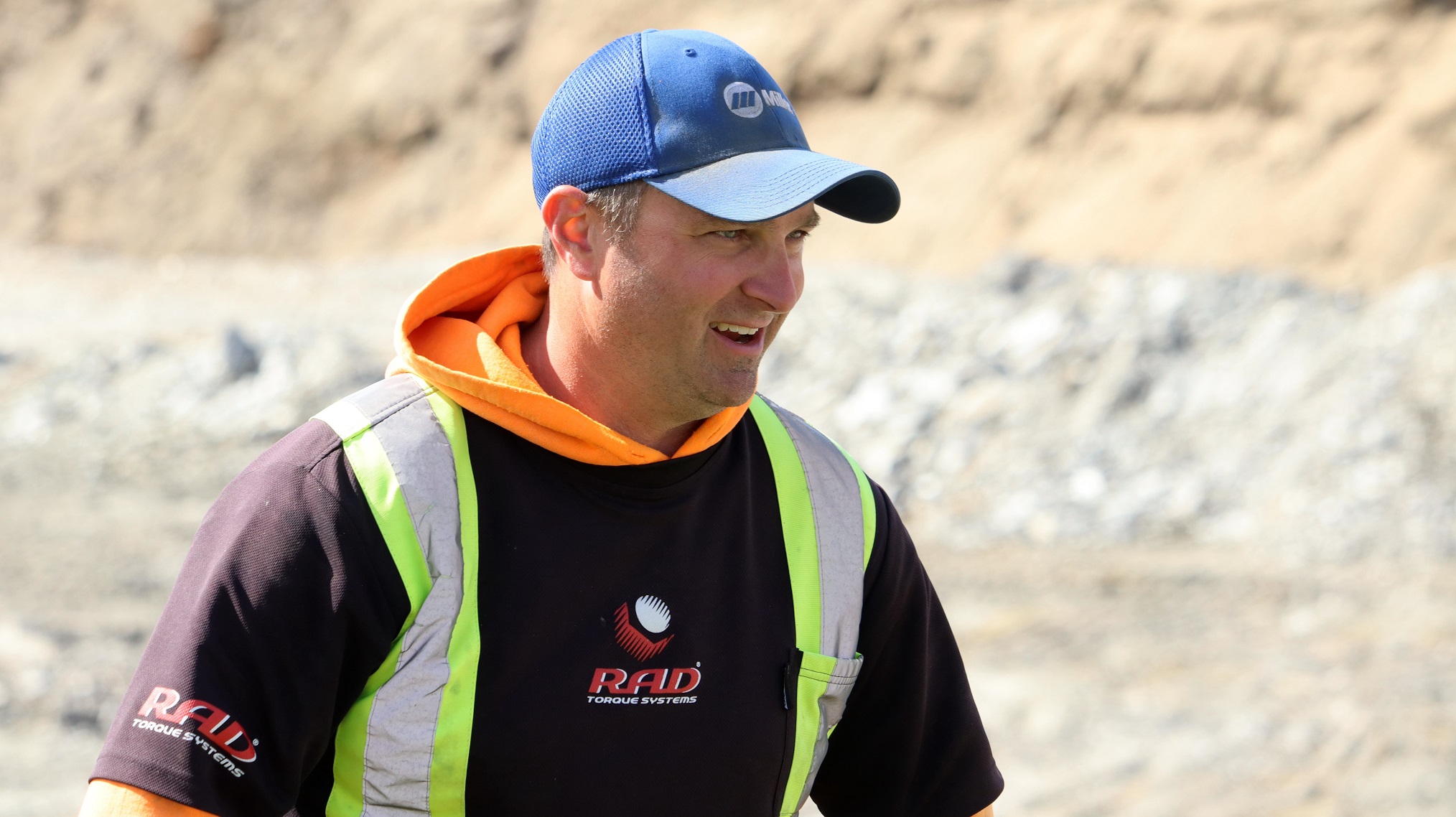
At Indian River, Mitch Blaschke and Brennan Ruault were given full control. At Dominion Creek and the Golden Mile, Tyson Lee stepped into command. Parker elevated himself out of daily firefighting and into a true executive role—monitoring gold totals, managing risk, and stepping in only when something threatened the entire season.
That structural shift alone explains much of Mitch’s absence from the screen.
Reality television doesn’t follow stability. It follows pressure.
Ironically, when Mitch dominated screen time in past seasons, it usually meant something had gone very wrong—collapsed trommels, misaligned sluice runs, or catastrophic gold loss. Mitch wasn’t just visible; he was essential because the operation was constantly on the brink.
This season, Indian River hasn’t faced prolonged disaster. The plant is running well. Gold is flowing. There’s no emergency demanding constant camera attention. And in the world of Gold Rush, smooth operations don’t generate drama.
In other words, Mitch’s quieter presence may be the strongest evidence yet that he’s doing his job exceptionally well.
Another subtle clue lies in Parker’s behavior. He doesn’t hover over Indian River. He doesn’t second-guess Mitch’s calls. That silence isn’t neglect—it’s trust. Mitch has reached a point where his work speaks for itself, even when the cameras aren’t there to capture it.
Meanwhile, the show’s focus has naturally shifted toward where the pressure now lives.
That pressure sits squarely on Tyson Lee.

Season 16 feels like the moment Parker stops protecting Tyson and starts testing him. Tyson’s journey—from rock truck driver back in Season 6 to leader of major wash plants like Lucifer and Big Bob—has been years in the making. Now, he’s been handed real authority and real consequences.
Running equipment is one thing. Leading crews, coordinating multiple machines, managing gold loss, and making decisions that affect livelihoods is something else entirely. This season, Tyson isn’t just operating—he’s owning outcomes. His confidence, self-doubt, and leadership struggles play out in real time, making him a natural focal point for the cameras.
That doesn’t mean Mitch is being replaced.
It means Parker is building depth.
Rather than relying on a single trusted lieutenant, Parker is deliberately expanding his leadership bench. Mitch represents proven stability. Tyson represents growth under pressure. Together, they form the backbone of an operation designed to function even when Parker isn’t physically present at every site.
This evolution is why Parker looks more prepared than ever to break a Gold Rush record. With Indian River running smoothly under Mitch, Dominion Creek pushing hard under Tyson, and multiple wash plants operating simultaneously, Parker is finally free to focus on strategy rather than survival.
The 10,000-ounce goal isn’t just about gold in the ground. It’s about systems, trust, and leadership maturity. Season 16 may ultimately be remembered not just as Parker Schnabel’s boldest gamble, but as the moment his operation transformed from a high-risk mining crew into a scalable, record-breaking machine.
So if Mitch Blaschke feels strangely absent, don’t mistake that for decline. On Gold Rush, the most important people often disappear from the screen when things are working exactly as they should.
And when the next crisis hits—as it always does—the cameras will be ready to find him again.