Rick Ness at a Crossroads: How a Late Water License Reshaped His Gold Rush Season

For Rick Ness, Season 16 of Gold Rush has been defined by uncertainty, hard choices, and relentless pressure. What began as a season clouded by legal delays and stalled ground has now shifted into a complex test of leadership, strategy, and endurance—following the unexpected renewal of a crucial water license at Duncan Creek.
When the season opened, Rick’s situation was dire. Without a valid water license, Duncan Creek—his proven, gold-producing claim—was completely off limits. The ground that had once carried his operation was suddenly unreachable, leaving Rick with no legal path forward. With time slipping away and no margin for delay, he made a painful but necessary decision: step away from Duncan Creek and search for opportunity elsewhere.
That decision led him to Lightning Creek, where Rick reunited with former landlord Troy Taylor and leased new ground in a bid to keep the season alive. The move required a full relocation of equipment, fuel, and crew to an area known as the Diamond Cut. It was unfamiliar ground, and the pressure was immediate. After weeks of stripping and hauling, the first gold run delivered just 7.35 ounces—worth roughly $25,000. For the effort involved, the return was deeply discouraging.

Rick was candid about the outcome. The ground had not performed as hoped, and the setback forced a reassessment. Rather than retreat, the crew continued stripping and began noticing physical signs that suggested better potential nearby: exposed bedrock, oversized rocks, and heavy boulders capable of trapping gold. Those indicators led Rick to redirect operations toward a new target, the Boulder Cut—what he openly described as Lightning Creek’s last real opportunity.




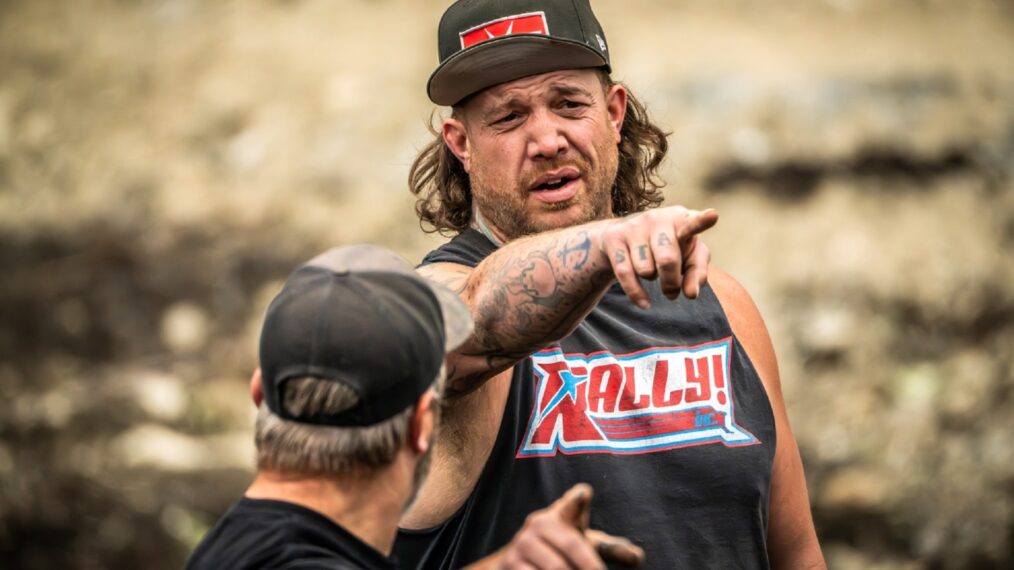
As the crew pushed forward, the work remained exhausting and uncertain. Then, in a moment no one anticipated, Rick called the team together at the layout yard. The atmosphere was tense. When he announced that the water license for Duncan Creek had finally been secured, the reaction was immediate and emotional. After months of legal limbo, the door to Vegas Valley was suddenly open again.
The importance of that news cannot be overstated. Duncan Creek is not just another claim. In only a few years, it had produced thousands of ounces of gold before operations were halted. Even more significant is the large pay pile left behind—material that could still hold substantial value. With permits now in place, that gold is no longer out of reach.

Yet celebration quickly gave way to reality. Rick cannot simply abandon Lightning Creek. His agreement with Troy Taylor includes a substantial gold payment tied to the purchase of the claim. That obligation means Lightning Creek must continue producing, regardless of how tempting a return to Duncan Creek may be.
Complicating matters further is manpower. With a relatively small crew, running two active mining sites simultaneously is not realistic. Splitting resources would weaken both operations and increase the risk of downtime and mechanical issues. Rick must commit fully to one location, knowing that each option carries significant cost and consequence.
Returning to Duncan Creek offers stability and predictability. The ground is proven, and the pay structure is well understood. However, moving equipment back would be expensive and time-consuming, potentially erasing weeks of productive mining in an already short season. Staying at Lightning Creek, by contrast, avoids relocation costs and keeps operations moving. Recent results from the Boulder Cut—22.35 ounces worth approximately $78,000 in a single week—suggest that persistence may finally be paying off.
Now, Rick stands at a defining moment. The pressure remains intense, but it has shifted from survival to strategy. The decision he makes—whether to trust the reliability of Duncan Creek or build momentum at Lightning Creek—will determine whether Season 16 becomes a genuine turnaround or another hard lesson in mining under pressure. One thing is certain: this choice will shape not only the remainder of the season, but Rick Ness’s legacy as a mine owner navigating adversity.
 TN
TN