$80 Million Strike? Parker Schnabel’s Alaska Discovery Could Redefine Modern Gold Mining
When reports surfaced that Parker Schnabel had uncovered a gold deposit in Alaska potentially valued at up to $80 million, the headline alone was enough to electrify fans of Gold Rush. But beyond the eye-catching dollar figure lies a deeper story—one that may signal a turning point not only for Parker’s operation, but for modern placer mining in the far north
For years, vast stretches of Alaskan and Yukon ground have been written off as too frozen, too remote, or too costly to mine efficiently. Permafrost, short operating seasons, and rising fuel and labor costs have forced even seasoned operators to be selective about where they dig. Many claims that showed promise decades ago were abandoned because the technology simply wasn’t advanced enough to extract gold profitably.
That context is what makes this reported discovery so compelling.
Unlocking Ground Once Considered Untouchable
Sources close to the operation describe gold-bearing ground buried beneath layers long considered unworkable. Historically, miners relied on traditional wash plants, bulldozers, and excavators to strip pay dirt and process material. But deeply frozen ground presents a unique challenge: it requires significant pre-thawing, heavy ripping equipment, and careful staging to avoid bottlenecks.
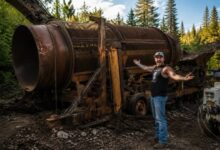
In recent seasons, Parker’s team has invested aggressively in larger, more efficient wash plants, improved water management systems, and data-driven ground testing. Instead of relying purely on instinct or historic drilling maps, the operation has increasingly leaned on detailed sampling and strategic stripping plans. The result? Faster yardage movement, better recovery rates, and the ability to evaluate ground others might overlook.



If the $80 million estimate proves even partially accurate, it suggests something bigger than a single lucky strike. It implies that the boundaries of viable mining territory may be expanding.
The Technology Factor
Modern placer mining has evolved dramatically in the last decade. High-capacity trommels, advanced sluice configurations, and optimized recovery systems mean that even lower-grade ground can be profitable if processed at scale. Add in GPS-guided excavation, drone surveying, and refined geological modeling, and today’s top-tier operations bear little resemblance to the small family outfits of the 1980s and 1990s.
Parker has long been known for reinvesting profits directly back into infrastructure. Larger wash plants can run higher yardage per hour. Better conveyors reduce downtime. Skilled mechanics on-site minimize costly shutdowns. Each incremental improvement compounds over a season measured in millions of dollars per week.
The Alaska discovery appears to reflect that philosophy. Rather than chasing only the richest visible pay streaks, the team seems willing to tackle challenging ground with confidence that modern systems can make it viable.
Risk Still Defines the Game
Yet even with cutting-edge equipment, gold mining remains one of the riskiest businesses on Earth. An $80 million projection is just that—a projection. Gold prices fluctuate. Recovery rates vary. Mechanical breakdowns can erase weeks of profit. Weather can shut down operations overnight.
The north offers only a narrow window to work. Crews race against early freeze-ups, equipment failures, and the relentless pressure of payroll. A single miscalculation in overburden depth or pay layer consistency can turn a promising cut into a costly gamble.
Parker’s reputation has been built not just on big gold totals, but on disciplined risk management. He has walked away from leases that didn’t make financial sense. He has absorbed losses and recalibrated. That pattern suggests that if this Alaska ground is being developed, it has undergone rigorous testing and planning.
Ripple Effects Across the Industry
If modern technology truly makes previously marginal ground profitable, the implications extend far beyond one claim. Other operators in Alaska and the Yukon may begin reassessing dormant leases. Investment interest in placer mining could rise. Equipment manufacturers may see increased demand for high-capacity systems capable of handling frozen conditions.
There is also the strategic dimension. As easily accessible deposits are depleted over time, the industry must adapt or decline. Innovations that unlock deeper or colder ground effectively extend the lifespan of placer mining regions once thought to be nearing their limits.
For younger miners watching from the sidelines, Parker’s approach may represent a blueprint: scale aggressively, adopt technology early, and treat data as seriously as instinct.
The Human Element Behind the Headlines
Lost in discussions of valuation and machinery is the human story. Mining at this level demands relentless commitment. Crews work long shifts under harsh conditions. Mechanics battle mud, ice, and exhaustion to keep critical equipment running. Foremen balance morale with production targets.
An $80 million figure sounds monumental—and it is—but it also represents thousands of cumulative decisions made correctly. From drill results to cut sequencing to sluice adjustments, success depends on precision.
Parker’s leadership style has evolved over the years. Early seasons showed a young boss learning through conflict and trial. More recent campaigns reveal a more measured operator, willing to delegate and trust experienced team members. If this Alaska ground becomes a defining chapter, it will likely reflect that growth.
Gold Prices and Timing
Another factor amplifying interest in the discovery is the broader gold market. Elevated gold prices increase the value of each recovered ounce and can justify higher operating costs. What may have been borderline ground at $1,200 per ounce becomes highly attractive at stronger price levels.
Timing, therefore, plays a crucial role. A breakthrough deposit discovered during favorable market conditions can accelerate expansion plans and solidify long-term strategy.
Redefining What’s Possible
Ultimately, the $80 million headline may symbolize something more abstract: a shift in perception. Regions once labeled too difficult or too expensive to mine may deserve a second look. Technology, scale, and experience are rewriting assumptions.
Whether the final tally reaches the projected valuation or falls short, the message is clear. Modern gold mining is no longer solely about chasing the richest visible streaks. It’s about engineering solutions to overcome environmental and logistical barriers.
If Parker Schnabel’s Alaska discovery truly opens ground others dismissed, it could mark a defining moment—not just in one miner’s career, but in the evolution of placer mining across the north.
And perhaps that is the real story behind the $80 million question.