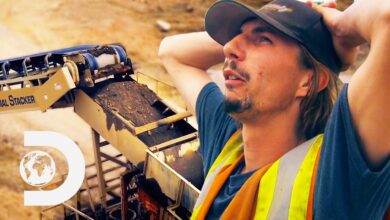
THE PAINFUL REALITY: Mounting Losses Push Rick Ness to Make the Decision That Changes Everything
Rick Ness on the Brink: Mounting Losses Force Desperate Equipment Sell-Off

As the mining season pushes into its most critical phase, mounting pressure is beginning to take a visible toll on Rick Ness, whose operation in Gold Rush is now facing a deepening financial संकट that threatens to unravel everything he has worked to build. After more than four months of continuous effort, long shifts, and significant investment, Rick’s team has reportedly failed to reach even 500 ounces of gold—an alarming shortfall when measured against the ambitious 1,800-ounce target set at the beginning of the season. In an industry where time is limited and margins are tight, such a gap is not just disappointing; it is potentially devastating.
At the center of the crisis lies Rick’s most ambitious project of the season, the Valhalla cut, a site that was expected to deliver strong returns but has instead become a source of escalating costs and frustration. According to sources close to the operation, more than one million dollars has already been poured into running the site, covering fuel, labor, equipment maintenance, and logistics. Despite weeks of excavation and the movement of massive volumes of earth, the results have been far from promising. Instead of hitting gold-rich pay dirt, the crew has repeatedly encountered thick layers of clay—material that offers no return and slows progress to a crawl. Each day spent digging without results adds to the financial strain, turning what was once seen as a high-potential investment into a growing liability.
The emotional impact of this prolonged struggle is becoming increasingly evident. Rick Ness, who built his reputation through persistence and a willingness to take calculated risks, now finds himself confronting the harsh reality that even the boldest plans can fail under the unpredictable conditions of gold mining. The weight of responsibility—toward his crew, his investors, and his own ambitions—has created a situation where every decision carries significant consequences. In recent statements, Rick has not скрывать the seriousness of the situation, acknowledging that without a meaningful gold recovery in the near future, the operation could face collapse.
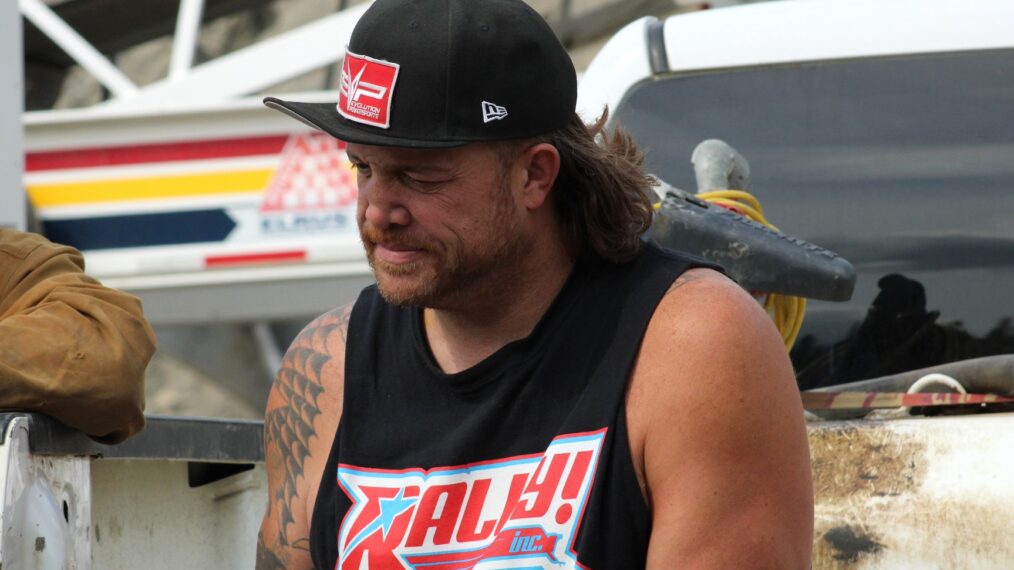



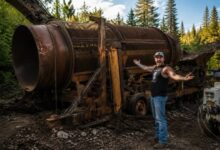
Faced with these mounting losses, Rick has reportedly begun taking drastic steps to stabilize the situation. Among the most difficult decisions is the need to sell off portions of his mining equipment, a move that underscores the severity of the financial pressure. Heavy machinery is not only essential for daily operations but also represents a long-term investment in the future of the mining business. Selling such assets can provide short-term relief by generating cash, but it also limits the operation’s capacity to scale up production if conditions improve. It is, in many ways, a last-resort measure—one that reflects a shift from growth to survival.
In addition to liquidating equipment, Rick is said to be aggressively cutting operational costs across the board. This includes reducing fuel consumption, limiting active work zones, and scaling back the size of the crew to a minimal level necessary to keep the operation running. For the team members who remain, this often means longer hours and increased pressure, as fewer մարդիկ are available to handle the same demanding workload. At the same time, these cuts are necessary to extend the life of the operation in the absence of sufficient gold returns.
The situation also highlights the inherent volatility of placer mining, where success depends on a combination of geological luck, technical skill, and timing. Even experienced miners can spend months pursuing a promising site only to discover that the gold deposits are far less substantial than expected. In Rick’s case, the Valhalla cut represents exactly this kind of high-risk, high-reward gamble—one that has so far failed to deliver on its promise. The challenge now is determining whether to continue investing in the site in hopes of eventually striking gold or to abandon it altogether in order to prevent further losses.
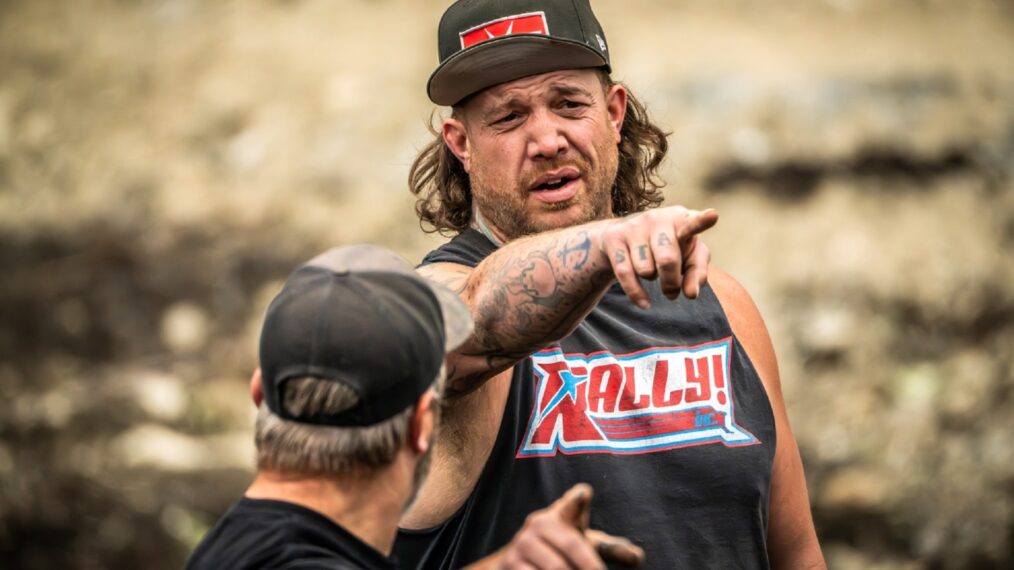
For Rick Ness, the stakes extend beyond a single season. Over the years, he has worked to establish himself as an independent operator capable of building a successful mining enterprise. The current الأزمة threatens not only the outcome of this season but also the broader vision of creating a sustainable and profitable operation. The prospect of bankruptcy, which Rick himself has openly acknowledged, adds an additional layer of urgency to every decision he makes.
Despite the grim outlook, there remains a narrow window of opportunity. Mining seasons are unpredictable, and fortunes can change quickly if a rich deposit is finally uncovered. However, the longer the current trend continues, the more difficult it becomes to recover both financially and psychologically. Every additional day without gold increases the pressure, narrowing the margin for error and forcing even more difficult choices.
For viewers of Gold Rush, Rick’s struggle serves as a powerful reminder that the pursuit of gold is as much about endurance and resilience as it is about النجاح. Behind the dramatic weigh-ins and moments of triumph lies a reality where failure is always a possibility, and where the line between success and collapse can be razor-thin. As Rick Ness navigates this κρίσιμη moment, the outcome remains uncertain, but one thing is clear: the dream of building a mining empire is being tested in ways that few could have anticipated.
 TN
TN