Parker Schnabel’s Deep Mine Discovery Raises New Questions Over the Future of His Season
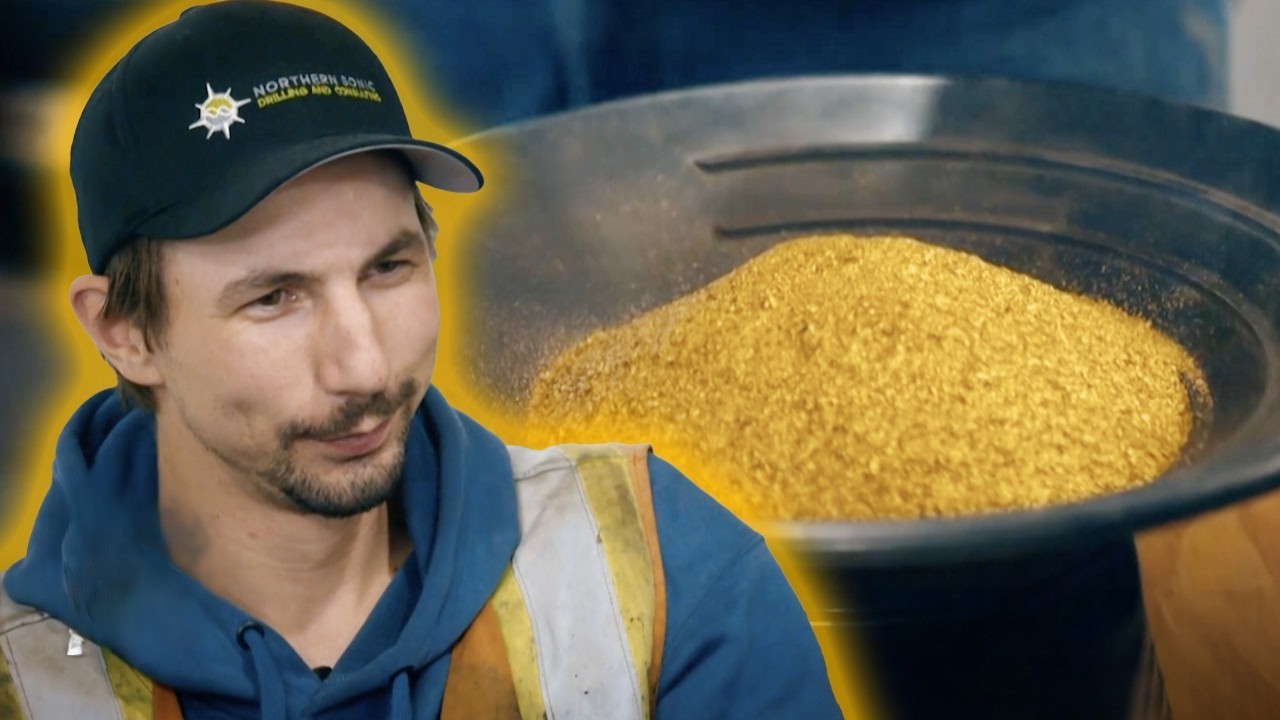
Parker Schnabel’s season appeared to have already reached a major turning point after his crew reportedly pulled in a gold haul worth around $10m. But according to the latest account emerging from the mine, that success may have been only the beginning of something far bigger.
What began as a hard push to keep the operation on track has now been framed as a potentially transformative discovery deep beneath Widow’s Cut, where Parker and his team are said to have uncovered an unusually rich quartz vein after reopening a long-lost underground access point. If the estimates attached to the find prove even partly accurate, it could become one of the most significant developments of Parker’s mining career.
The challenge, however, was never simply reaching the gold. The ground itself had become one of the crew’s greatest obstacles. Frozen earth, unstable rock and the constant risk of collapse had made traditional excavation increasingly difficult, while the possibility of flooding added another layer of danger. Under those conditions, opening a fresh route into the cut would have required a great deal of time, money and risk, with no certainty that the effort would pay off.



That appears to be the moment Parker changed direction.
Rather than relying only on conventional excavation, the operation reportedly turned to advanced surveying tools, including LiDAR and drone mapping, to build a more detailed picture of the terrain. The goal was to understand the structure of the ground more clearly before committing to a new path. What those scans allegedly revealed was not just a safer route, but a forgotten vertical shaft buried beneath the surface, one that may once have led directly toward the mineralised zone the crew had been chasing.
That discovery seems to have altered the entire plan.
Instead of cutting an entirely new ramp into difficult permafrost, Parker’s team is said to have focused on reopening and stabilising the old shaft, reinforcing it carefully before working their way deeper underground. It was a risky move, but one that appears to have delivered immediate results. Once inside, the crew reportedly struck an untouched quartz-rich vein carrying unusually strong gold values, described in the material as one of the finest natural deposits the team had encountered.

What followed was a rapid and intense extraction effort.
The account claims that within just over 72 hours, the crew recovered more than 4,000 ounces of gold from the vein, giving Parker a haul valued at more than $10m. In pure operational terms, such a return would be enormous. It would cover major seasonal costs, strengthen the mine’s financial position and give Parker room to continue pushing ahead even as conditions grow more demanding.
Yet the bigger story may lie beneath that first result
The same material suggests that geological analysis of the vein led the team to believe it extends far deeper and farther than originally expected, possibly continuing for as much as two kilometres underground. On that reading, the original strike was not an isolated pocket but the upper portion of a much larger system. Estimates linked to the discovery suggest the remaining gold in the structure could be worth tens of millions more, potentially as much as $75m.
That kind of figure would naturally change the conversation around the season
For Parker, it would not simply mean a successful run. It would raise the prospect of a mine capable of reshaping the scale of his entire operation. A discovery of that size would demand more planning, more workers, more machinery and more careful control over costs and logistics. It could also place Parker under a new level of scrutiny, both from rivals across the Klondike and from observers wondering whether he can manage an opportunity of that size without losing control of the wider operation.
There is also a wider effect to consider.
In mining districts such as the Klondike, major discoveries rarely stay quiet for long. Reports of a rich new vein can quickly influence land values, attract outside interest and shift competitive pressure across neighbouring claims. Even when the legal ownership is secure, the attention surrounding a large strike can create its own operational burden. Expansion brings complexity, and complexity often tests leadership as much as geology.
That may be where the next phase of Parker’s season becomes most interesting.

He has long built his reputation on speed, discipline and a willingness to push further than many others would. Those qualities may have helped him reach this point, but handling a deeper and more valuable deposit is a different test from finding one. The task now is not simply to recover gold. It is to scale the discovery carefully, protect the operation from technical setbacks and ensure that the promise of the find translates into sustained production rather than short-lived excitement.
For now, the reported discovery at Widow’s Cut remains the kind of development that can alter both a season and a reputation. It offers Parker Schnabel the possibility of turning a strong year into something much larger. But it also places him at the edge of a new challenge, one in which success will depend not just on what lies underground, but on whether his team can manage everything that comes with uncovering it.
If the early figures attached to the vein hold up, Parker may not simply have found another profitable cut. He may have opened the door to the most consequential stretch of mining his crew has faced in years