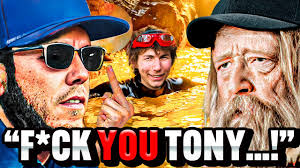
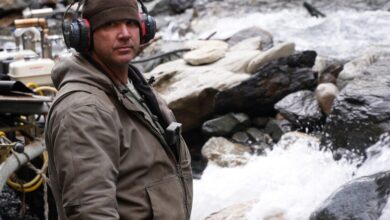
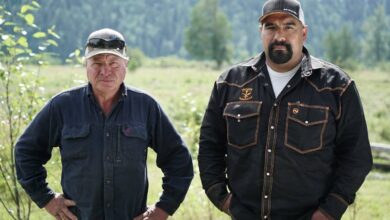
RICK NESS’ ALLIANCE WITH GOLD RUSH GIANTS: A Bold Move to Protect Profits
The Yukon gold fields are unforgiving. For miners in the high-stakes world of Gold Rush, every season presents a relentless battle against the elements, equipment failures, and the constant pressure of maximizing profits. Season 16 was no different, and for Rick Ness, the mid-season slump threatened not only his haul but the reputation he had built over years of grueling work. Facing the possibility of falling short of his ambitious goals, Rick made a daring and strategic decision: he formed an alliance with two of the most formidable figures in the Klondike—Parker Schnabel and Tony Beets. This move, unprecedented in recent seasons, showcased not only his resourcefulness but also the high-stakes collaboration that can redefine success in the gold fields.

For those following Rick Ness, the challenges of Season 16 were immediate and formidable. His claims had underperformed during the early months, plagued by slower-than-expected extraction rates and unexpected mechanical issues. With operational costs soaring and every ounce of gold carrying immense financial weight, Rick faced a critical crossroads. In the world of Gold Rush, stagnation can quickly erode profits, and mid-season decisions often make or break the bottom line. It was in this context that Rick turned to his fiercest competitors—and in doing so, demonstrated a boldness that few could have anticipated.
The alliance with Parker Schnabel and Tony Beets was both pragmatic and strategic. Rick’s decision was driven by a clear understanding: to maximize output in the final months of the season, he needed access to additional resources, manpower, and technical expertise. Parker’s precision with extraction techniques and Tony’s mastery of heavy equipment operations complemented Rick’s operational acumen perfectly. Together, the three crews coordinated schedules, shared critical machinery, and even pooled insights into claim management and ore processing. This collaboration allowed Rick to target the richest sections of his claim more efficiently, accelerating production and mitigating some of the early-season losses.




Yet, forming an alliance among three strong-willed crews was far from simple. Historically, Parker and Tony have been competitors, each fiercely protective of their gold reserves and operational secrets. Convincing them to cooperate required not only negotiation skills but also a degree of trust and mutual benefit. Rick leveraged his reputation as a reliable operator and his history of fair dealings to broker an agreement that satisfied all parties. The alliance demonstrated that even in a fiercely competitive environment, strategic collaboration can outweigh traditional rivalries when profit—and survival—is at stake.
The benefits of this alliance were immediate. Shared knowledge allowed the crews to identify previously overlooked gold-rich zones, and coordinated equipment use reduced downtime significantly. Rick’s team could focus on extraction and processing while Parker and Tony’s crews provided specialized support where needed. The synergy created by this temporary coalition resulted in a surge of gold recovery that reignited Rick’s Season 16 campaign. The boost in output not only stabilized his financial position but also reinforced the principle that adaptability and cooperation are as valuable as raw labor and machinery in the harsh Yukon landscape.

However, the alliance was not without its challenges. Coordination among three separate crews with distinct leadership styles and operational philosophies required constant communication and compromise. Scheduling conflicts, equipment sharing disputes, and differing extraction approaches had the potential to undermine the collaboration. Moreover, environmental conditions in the Klondike remained unpredictable. Heavy snowfall, shifting riverbeds, and mechanical breakdowns tested the alliance’s resilience and highlighted the fine balance between cooperation and chaos. Yet, through careful planning and a shared commitment to success, Rick, Parker, and Tony managed to navigate these hurdles.
The human element of the alliance added another layer of intrigue. For viewers and fans of the series, seeing these seasoned miners—each accustomed to operating independently—work together offered unprecedented insights into the psychology of high-pressure collaboration. Moments of tension, negotiation, and mutual respect were captured on camera, illustrating the complex interpersonal dynamics at play. Rick’s leadership and ability to foster trust were particularly noteworthy, as he balanced assertiveness with diplomacy to maintain cohesion among the crews. The narrative unfolded not just as a tale of gold recovery but also as a story of strategy, negotiation, and human ingenuity under extreme conditions.
This alliance also had broader implications for the season. By pooling resources and expertise, the crews were able to push the boundaries of production, achieving milestones that would have been difficult for Rick alone. The partnership demonstrated that in a high-stakes environment, collaboration—even among competitors—can create opportunities that surpass individual capabilities. It also raised questions about traditional approaches to the gold rush: could strategic alliances become a standard tactic in future seasons, reshaping the competitive landscape?
From a financial perspective, the impact of the alliance was significant. Rick Ness’ Season 16 profits, initially at risk, were safeguarded through a combination of increased output, optimized claim management, and efficient use of shared equipment. This turnaround reinforced Rick’s reputation as not just a capable miner but also a strategic thinker capable of navigating the complex economics of gold mining. The alliance also highlighted the importance of adaptability; in an industry where conditions change rapidly and equipment failures are common, the ability to form and leverage relationships can be as critical as physical labor.
For fans, the alliance offered a dramatic storyline rich with suspense and strategy. The combination of unexpected collaboration, high-pressure decision-making, and the relentless pursuit of profit made for compelling viewing. Episodes captured the tension, triumphs, and occasional setbacks, drawing viewers into the intricate dynamics of teamwork and competition. The success of the alliance became a central narrative thread, illustrating how calculated risk-taking and strategic thinking can redefine outcomes even in the most unpredictable environments.
Looking ahead, the Season 16 alliance between Rick Ness, Parker Schnabel, and Tony Beets may serve as a blueprint for future operations. The experiment in collaboration demonstrated that even in fiercely competitive fields, mutual benefit and strategic coordination can produce superior results. For Rick, the partnership not only salvaged his season but also positioned him as a shrewd operator capable of turning adversity into opportunity. For the fans, it was a reminder that the gold fields are as much a test of intellect, strategy, and leadership as they are of physical endurance and stamina.
Ultimately, the story of Rick Ness’ alliance is one of ingenuity, risk, and adaptability. By bringing together three formidable crews under a shared goal, Rick transformed a potential season-ending slump into a narrative of resilience and strategic triumph. The lessons of Season 16 extend beyond gold mining; they speak to the power of collaboration, the importance of flexible thinking, and the human capacity to overcome even the most daunting challenges. As the season concludes, viewers are left with a compelling example of how innovation, partnership, and bold decision-making can redefine the limits of what is possible in the high-stakes world of the Yukon gold rush.
In conclusion, Rick Ness’ strategic alliance with Parker Schnabel and Tony Beets represents one of the most significant collaborative efforts in Gold Rush history. By aligning resources, sharing expertise, and navigating interpersonal and environmental challenges, the alliance not only protected Rick’s profits but also demonstrated the potential of cooperation in a traditionally competitive landscape. Season 16 stands as a testament to the enduring combination of skill, strategy, and human ingenuity that defines the series, leaving fans eager to see what challenges and alliances future seasons will bring