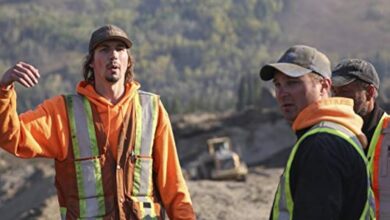
A Challenging Start Leads to a Major Win as Rick Ness Secures a Standout Gold Haul
In the high-stakes world of gold mining, where every decision carries financial risk and every setback can derail an entire season, resilience is often the defining factor between failure and success. For Rick Ness, this season on Gold Rush began under a cloud of uncertainty that threatened to end his campaign before it truly began.
The problem was immediate and unavoidable: frozen ground.

In the Klondike, timing is everything. Mining seasons are short, and crews depend on favorable conditions to maximize productivity. When the ground remains frozen longer than expected, it creates a bottleneck that affects every part of the operation. Equipment cannot operate at full capacity, excavation slows dramatically, and costs begin to rise even as output remains limited.
For Rick, this wasn’t just an inconvenience—it was a crisis.




With his mining plans stalled and the clock ticking, the pressure began to mount. Every day lost meant fewer opportunities to recover gold, and the financial strain of maintaining an idle or underperforming operation quickly became a serious concern. In an industry where margins can be tight and unpredictability is constant, situations like this can push even experienced miners to the brink.
But what set this moment apart was how Rick responded.

ather than waiting for conditions to improve, he chose to adapt.
The decision required both risk and creativity. Traditional approaches were no longer viable, so Rick began exploring alternative strategies—adjusting his mining plan, reassessing ground conditions, and identifying areas that could still yield results despite the challenges. It was not a guaranteed solution, but it was a necessary one.
This shift in strategy marked a turning point.
As operations resumed under this new approach, the early signs were promising. While progress was still slower than ideal, the crew began to regain momentum. Equipment was repositioned, workflows were adjusted, and the team started to find a rhythm that allowed them to move forward despite the difficult conditions.
What followed was a gradual but unmistakable transformation.
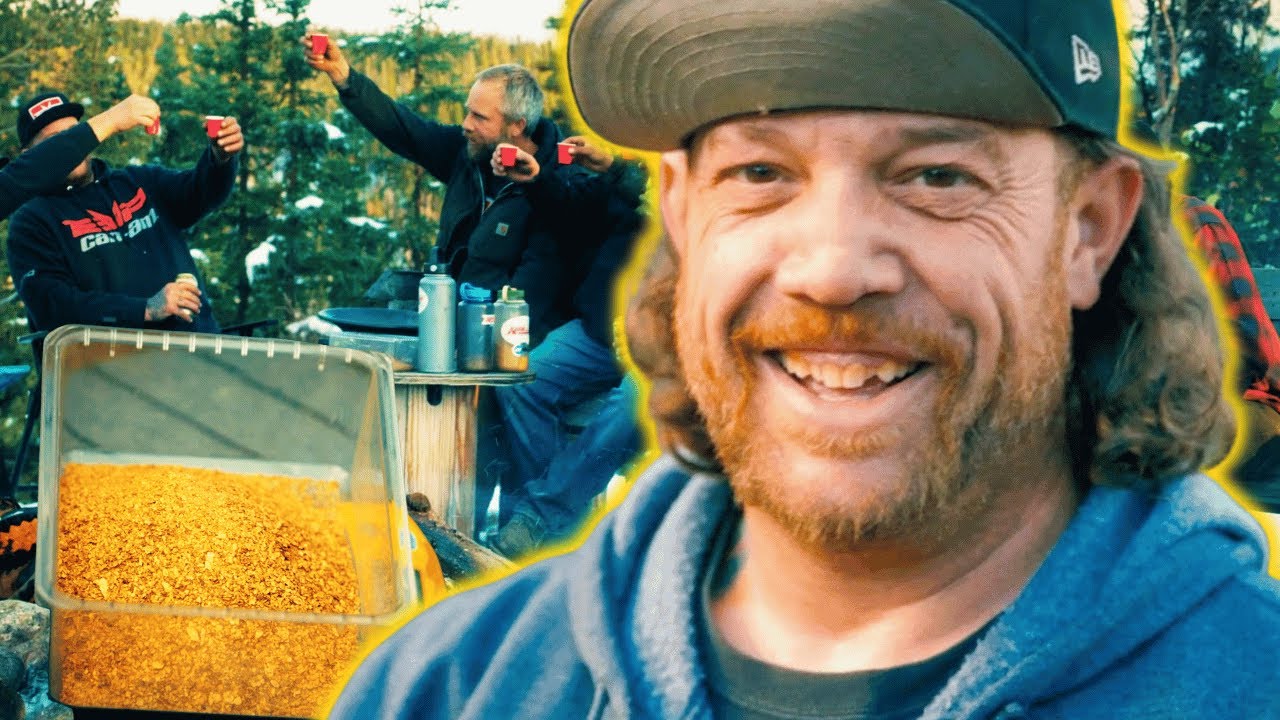
The same season that had once seemed destined for disappointment began to show signs of recovery. Gold totals started to increase, and confidence within the crew grew alongside them. Each successful run reinforced the idea that the decision to pivot had been the right one.
Still, the true scale of the turnaround was not immediately apparent.
It was only as the weeks progressed and the numbers continued to climb that the full impact became clear. What had begun as a desperate attempt to salvage the season evolved into something far more significant—a performance that would ultimately result in a gold haul valued at approximately $2.3 million.
For Rick and his crew, this was more than just a financial milestone.
It was validation.
Validation of their willingness to take risks, to adapt under pressure, and to continue pushing forward even when the odds seemed stacked against them. In an industry where success is never guaranteed, moments like this serve as powerful reminders of what determination and strategic thinking can achieve.
On Gold Rush, viewers have witnessed countless ups and downs, but few storylines capture the essence of mining quite like this one. It is not just about the gold—it is about the process, the decisions, and the resilience required to navigate an environment that is constantly working against you.
Rick’s journey this season highlights several key realities of modern gold mining.
First, adaptability is essential. Conditions can change rapidly, and those who are able to adjust their strategies accordingly are far more likely to succeed. Second, risk is unavoidable. Every major decision carries the potential for both reward and loss, and knowing when to take that risk is a critical skill. Finally, teamwork plays a central role. No turnaround of this scale happens without a crew that is willing to commit, adapt, and execute under pressure.
The emotional aspect of the journey should not be overlooked either.
For Rick, the early struggles were not just professional challenges—they were personal ones. The weight of responsibility, the uncertainty of the outcome, and the constant pressure to deliver can take a significant toll. Overcoming those challenges requires not only technical skill but also mental resilience.
As the season progresses, the story of this turnaround continues to resonate.
It serves as a reminder that setbacks, while difficult, are not always final. In many cases, they become the catalyst for innovation and growth. What matters is how they are approached—whether they are seen as obstacles or opportunities.
For Rick Ness, this season will likely be remembered as a defining chapter.
What began as a near-disaster evolved into one of the most impressive recoveries in recent memory. The $2.3 million gold haul stands as a testament to what can be achieved when persistence meets adaptability.
And as the dust settles and the numbers are counted, one thing becomes clear: in the unpredictable world of gold mining, success is not just about finding gold—it is about finding a way forward when everything else seems to stand in your way.
 TN
TN