Gold Rush Shake-Up: Rick Ness Finds What 19th-Century Prospectors Couldn’t Reach
For years, Rick Ness carried the label of underdog on Gold Rush. While industry heavyweights commanded massive crews and multimillion-dollar wash plants across the Klondike, Ness often appeared to be battling thinner margins, mechanical setbacks, and relentless pressure to prove himself. But in a dramatic twist that could reshape the competitive landscape in the Yukon, Ness has delivered a breakthrough few saw coming—by reopening a long-abandoned 19th-century shaft and reaching gold that original prospectors never could.

The discovery centers on a historic underground working that had been left idle for over a century. Records indicate that early miners sank the shaft during the height of the Klondike Gold Rush, only to halt operations after encountering a hardened, cement-like barrier that proved impenetrable with the tools and technology of the era. At the time, dynamite was limited, drilling equipment was primitive, and geological understanding was incomplete. Faced with mounting costs and minimal progress, the original crew walked away.
For decades, the shaft remained a footnote in local mining lore—another “what if” story buried beneath layers of frozen ground and Yukon legend.
Rick Ness saw it differently.
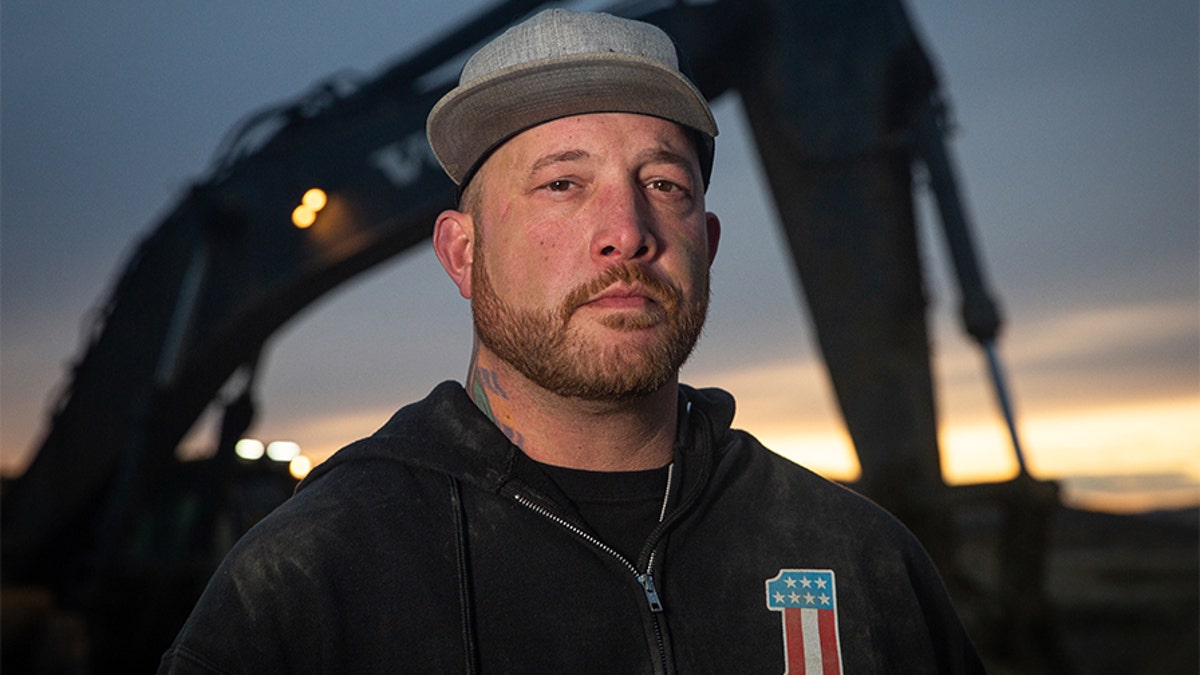




Sources close to the operation say Ness had been reviewing old maps and geological surveys when he became intrigued by the shaft’s abrupt termination. Rather than accepting the historical assumption that the ground beyond the barrier was unworkable, he questioned whether the early prospectors had simply lacked the means to push further. Advances in excavation equipment, reinforced drilling systems, and ground stabilization techniques gave him confidence that modern methods could succeed where 19th-century tools had failed.
The decision was far from safe.
Reopening an old shaft carries significant risk. Timber supports rot. Air quality becomes unpredictable. Collapsed sections can conceal unstable voids. In addition, the Yukon’s permafrost can complicate structural integrity when disturbed. Ness and his crew reportedly invested weeks reinforcing access points, stabilizing walls, and conducting careful test drills before attempting a full breach of the cemented obstruction.
When they finally broke through, what lay beyond exceeded expectations.
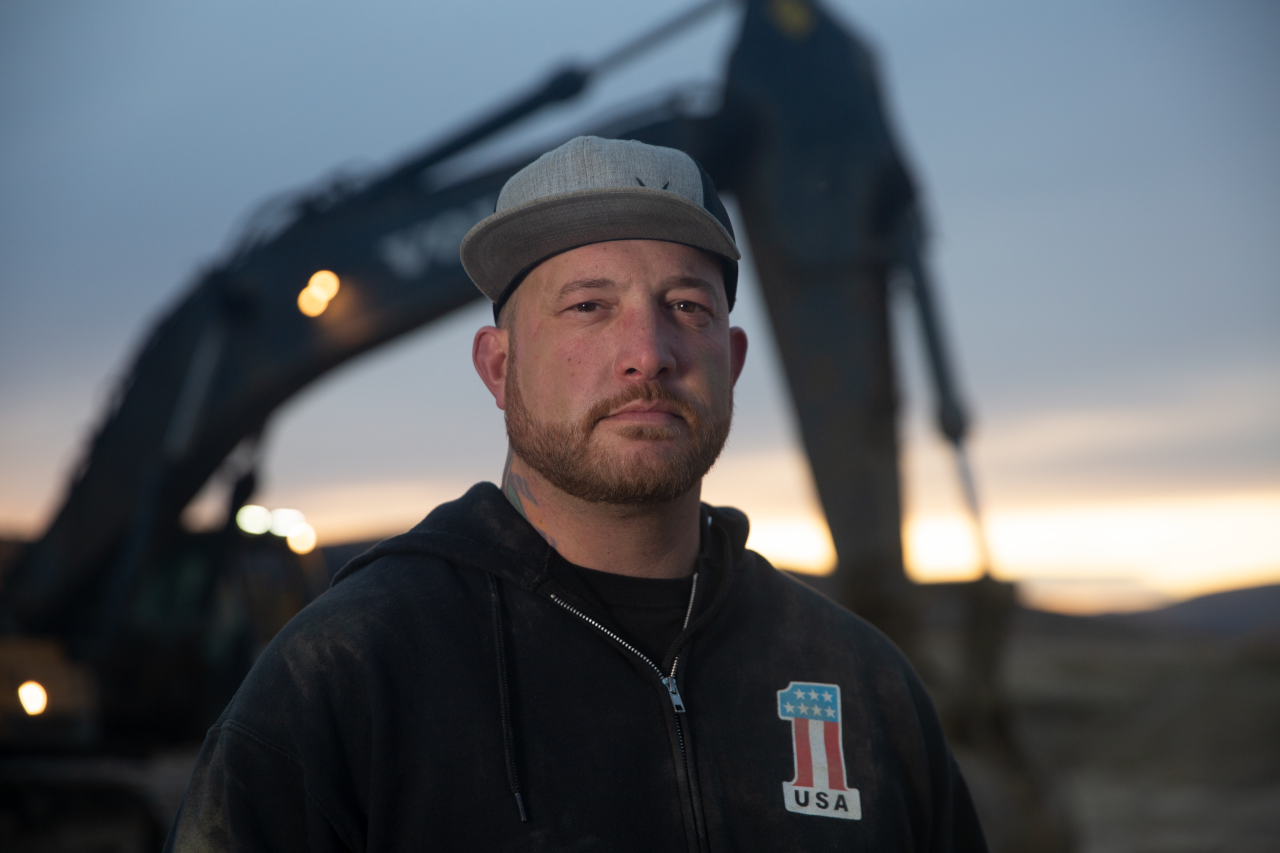
Preliminary sampling revealed a high-grade gold pocket concentrated in quartz-rich veins—material that early miners likely sensed but never accessed. Unlike dispersed placer gold common in surface operations, this deposit appeared more consolidated, suggesting the potential for sustained underground extraction rather than short-lived pay streaks.
Industry observers note that high-grade finds of this nature can dramatically alter a mining season’s economics. In placer operations, profitability often hinges on volume—moving vast quantities of gravel to capture modest concentrations of gold. A concentrated pocket, however, can generate substantial returns with comparatively less material processed, provided it is safely and efficiently accessed.
For Rick Ness, the timing could not be more pivotal.
In recent seasons of Gold Rush, Ness faced mounting financial strain, mechanical breakdowns, and questions about his long-term viability as an independent operator. Competing against larger crews led by established figures such as Parker Schnabel, Ness often appeared to be fighting uphill. Critics questioned whether his operation could sustain itself in a region where equipment costs and labor expenses climb each year.
This discovery changes that narrative.
By tapping into a forgotten shaft and unlocking gold that eluded the original prospectors, Ness has repositioned himself not as the miner barely hanging on—but as a strategic risk-taker capable of innovation. Rather than expanding outward into new claims with uncertain returns, he looked backward, leveraging historical data to guide modern exploration.
The move reflects a broader shift in Klondike mining strategy. As easily accessible ground becomes scarcer, miners increasingly turn to advanced mapping, archival research, and precision drilling to uncover overlooked zones. Historical records, once considered anecdotal, now serve as valuable geological clues when paired with modern analytics.
Still, challenges remain.
Underground mining introduces complexities absent from surface operations. Ventilation, drainage, and structural support require ongoing oversight. Gold concentration must be verified through consistent sampling, and early results—no matter how promising—must be sustained to justify continued investment. A single rich pocket does not guarantee an entire season’s success.
Ness appears aware of the stakes. Insiders describe a measured response rather than unrestrained celebration. Production schedules have reportedly shifted to balance underground work with ongoing surface operations, ensuring the crew maintains diversified output streams.
The psychological impact on the team may be just as significant as the financial one. For miners accustomed to battling setbacks, a breakthrough of this magnitude can restore morale and sharpen focus. Years of persistence, long hours, and uncertain paydays suddenly feel vindicated.
For viewers of Gold Rush, the discovery injects fresh energy into the season’s competitive arc. The Yukon has long been portrayed as a proving ground where only the most resilient survive. Ness’s success in reviving a dormant shaft reinforces that theme—demonstrating that innovation, not just scale, can tip the balance.
Local historians have also taken note. The idea that modern miners are completing unfinished chapters of the Klondike Gold Rush adds a layer of historical continuity to the find. The original prospectors who abandoned the shaft likely believed they had reached the end of the line. More than a century later, new tools and new determination have rewritten that conclusion.
Whether this high-grade pocket represents a singular windfall or the gateway to a broader underground network remains uncertain. Further drilling and structural evaluation will determine the deposit’s true scope. But one fact is clear: Rick Ness has disrupted expectations.
No longer confined to the narrative of struggling miner in the shadow of giants, he has demonstrated that strategic thinking and calculated risk can unlock opportunity where others once stopped.
In the unforgiving landscape of the Yukon, fortunes can change quickly. This time, the ground itself has tilted in Rick Ness’s favor. And in a region defined by both history and ambition, that may be the most powerful shift of all.
 TN
TN